
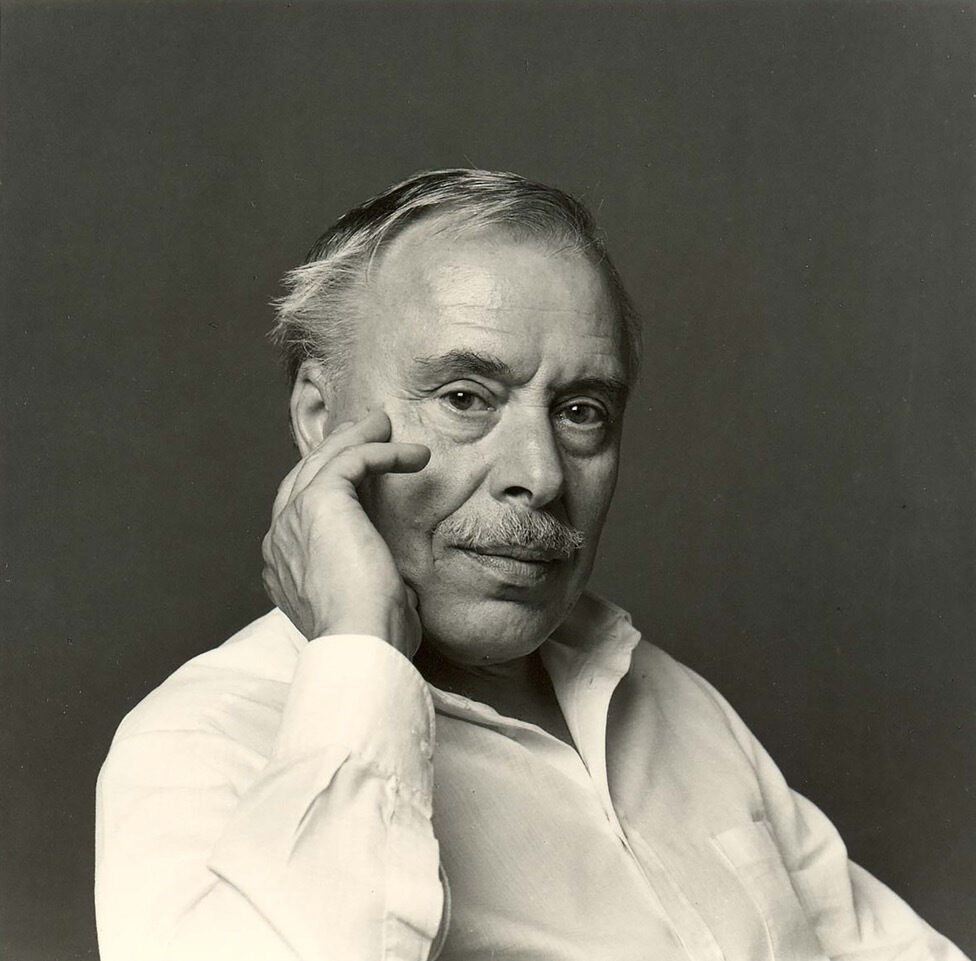
On 2 and 3 October, the Royal Conservatoire The Hague commemorates Gottfried Michael Koenig, one of the pioneers of electronic music and a key figure in the history of the Institute of Sonology. Two concerts highlight his music and explore how his ideas continue to live on in the work of new generations of composers.
Koenig would have turned 100 on 5 October this year. For the Institute of Sonology, this is about more than looking back. His ideas about music, technology and composition remain present in the institute’s teaching and work today. The two concerts make this audible: on 2 October, the focus is on Koenig’s own music, while on 3 October, students, teachers and alumni present works inspired by his oeuvre.
From Cologne to The Hague
Koenig began working in electronic music in 1954 at the electronic music studio of the broadcasting corporation in Cologne. There, he composed his own electronic music and worked as a technician alongside leading composers. He played an important role in the creation of works by Karlheinz Stockhausen, among others.
Koenig recognised the possibilities of using computers for music early on. In 1964, he became artistic director of the Studio for Electronic Music (STEM) at Utrecht University. Under his leadership, STEM grew into a complex of studios with a workshop and library. In 1967, it became the Institute of Sonology.
There, Koenig developed new ways of using computers to create and analyse sounds and for algorithmic composition. For him, technology was never simply a tool. New technology also had to lead to new ways of thinking about music.
In 1986, the Institute of Sonology moved to the Royal Conservatoire. Koenig retired that same year but continued to follow developments at the institute well into old age.
‘Whenever he called me, the first thing he would ask was: how are things at the institute?’ says Kees Tazelaar, Head of the Institute of Sonology. ‘He wanted to know exactly how things were going, whether there were enough students and whether the institute was receiving enough support. He really always saw it as his brainchild.’
2 October: Koenig from his early work to his final composition
The concert on 2 October presents different sides of Koenig’s oeuvre, with music from various periods of his life, from early compositions to his final completed work.
A special place in the programme is reserved for Streichquartett 2019. Koenig composed the work at the age of 93, but it has never been performed. On 2 October, it will receive its world premiere.
Tazelaar received the score directly from Koenig at the time. Koenig also included the string quartet in the official list of works on his website. ‘I haven’t heard the piece yet; I’ve only seen the score. But I can form an impression of it and see that it will sound like Koenig. When there is something completely new by such an important composer, I’m incredibly curious to hear what it will sound like.’
Koenig’s early work will also be heard, including the Zwei Klavierstücke from 1957. These pieces already show how his experiences in the electronic studio influenced his instrumental music. He composed separate musical layers and then superimposed them, similar to the way he worked with tape in the studio.
The programme also includes an electronic composition from the 1960s and a work by Konrad Boehmer, former Head of the Institute of Sonology and a student of Koenig.
3 October: Koenig’s ideas in the music of today
While the concert on 2 October focuses on Koenig’s own oeuvre, the concert on 3 October turns firmly towards the present. Students, teachers and alumni of the Institute of Sonology present works inspired by Koenig’s methods and ideas.
The initiative for this second concert came from teacher Bjarni Gunnarsson. According to Tazelaar, this programme in particular demonstrates why Koenig remains relevant: ‘We’re not simply focusing on something from the past, but on something from the past that still has great value for us today.’
Tazelaar will also present one of his own compositions during the concert. The recent work was created in the Voltage Control Studio at the Institute of Sonology and was inspired in part by Koenig’s electronic Funktionen from the 1960s.
An important principle is the use of variants. By applying the same compositional principles several times and in different ways, composers can explore what a particular method produces. Koenig frequently used this approach in his own work.
‘For me, composing isn’t just about making something you like, or something you hope the audience will like,’ says Tazelaar. ‘You also do it to take music further. You try out a concept and see what comes out of it.’
Music that demands attention
The two concerts present two sides of the same history. On 2 October, audiences can hear the development of Koenig’s own oeuvre, including a composition that has never before been performed in public. A day later, the focus shifts to how his ideas continue to live on in the music being created at the Institute of Sonology today.
For Tazelaar, this music also asks something of its audience: attention. ‘Music deserves the fullest concentration of performers and listeners.’
This view reflects Koenig’s own approach. For him, his compositions were not illustrations of a story. Music was first and foremost something to be explored, created and listened to on its own terms.
This is precisely where the connection between the two concerts lies. One hundred years after Koenig’s birth, his work is not simply being performed again. His ideas continue to provide a starting point for new music.